
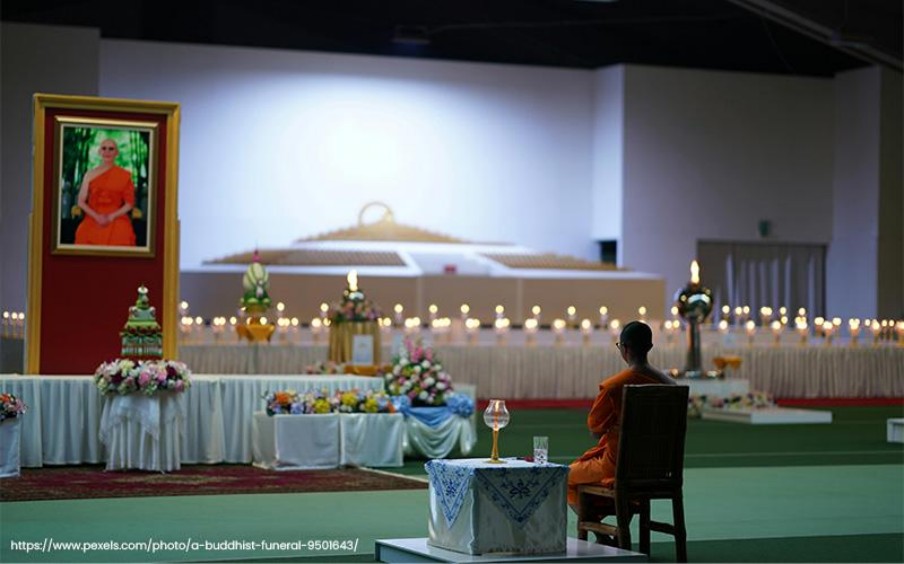
Key Takeaways
- Mixed religious practices affect how Buddhist funeral services are structured, not just the choice of rituals.
- Funeral services must consider family expectations, religious boundaries, and venue compliance when rites differ.
- Monastic participation is not guaranteed when non-Buddhist elements are included in Buddhist funeral services.
- Wake flow, chanting schedules, and ceremonial items often require modification when rites are mixed.
- Clear documentation and early agreement among family members reduce operational conflict during funeral arrangements.
Introduction
Once a deceased individual practised mixed religious rites during their lifetime, families often face uncertainty when arranging Buddhist funeral services. The issue is not cultural sensitivity alone. Funeral services in Singapore operate within defined religious protocols, operational constraints, and regulatory requirements. Once Buddhist rites are combined with Taoist, Christian, or secular elements, service providers must restructure the wake format, ritual flow, and ceremonial roles to avoid conflict with monastic guidelines and venue rules. Families who assume that all elements can be combined without adjustment frequently encounter last-minute changes, delays in scheduling, or restrictions on what can be performed. Knowing what changes operationally and ritually allows families to set realistic expectations and make decisions without disruptions during a sensitive period.
Ritual Structure Changes When Mixed Rites Are Involved
Buddhist funeral services follow specific ritual sequences that govern chanting schedules, altar arrangements, and the presence of monastics. Once the deceased practised mixed religious rites, these sequences are rarely applied in full. Monks may agree to perform selected chanting sessions but decline involvement if Taoist rites, ancestor worship practices, or Christian prayers are conducted at the same wake. This instance affects how the funeral programme is structured. Chanting sessions may be separated by time blocks, with non-Buddhist rites scheduled outside monastic presence. Funeral services must therefore allocate longer wake durations or restructure daily schedules to accommodate separate rites without overlap. This situation also changes how the wake is staffed, as different officiants may be required on different days, increasing coordination complexity and administrative oversight.
Changes to Monastic Participation and Religious Authority
Monastic participation is often central to Buddhist funeral services, but mixed religious practice limits the scope of what monks will conduct. Monks may restrict chanting to core Buddhist rites and decline participation in joint ceremonies involving other religious symbols or prayers. This instance changes how religious authority is presented at the wake. Families expecting a single religious figure to lead all rites may find that responsibilities are split between different officiants. Funeral services must manage this by clarifying boundaries early and confirming which rites will be recognised by each religious representative. Failure to align expectations can result in monks withdrawing participation mid-arrangement, forcing families to revise programmes with limited time before the wake begins.
Changes to Wake Setup, Altar Design, and Symbol Use
Wake setup is one of the most visible areas where mixed rites alter Buddhist funeral services. Traditional Buddhist altars follow specific layouts, with controlled use of religious symbols and offerings. Once mixed religious elements are introduced, altars may need to be simplified or separated to avoid conflicting symbolism. Some funeral venues in the city-state restrict the display of multiple religious symbols within a single wake area, requiring physical separation or sequential setup changes. Funeral services must also comply with venue regulations for void decks, parlours, and private residences, which can limit how multiple altars or ceremonial items are arranged. This situation affects logistical planning, space allocation, and teardown schedules, particularly in high-density residential environments.
Administrative and Scheduling Implications for Funeral Providers
Mixed religious rites increase administrative complexity. Buddhist funeral services typically follow a defined timeline leading to cremation or burial, but additional rites introduce scheduling conflicts with crematorium slots, monk availability, and venue booking windows. Funeral services must manage these variables while ensuring compliance with permit requirements and neighbourhood restrictions. Additional paperwork may be required when multiple religious officiants are involved, particularly when rites extend beyond standard wake durations. Families who finalise mixed rites late in the planning process often face limited availability for monks or cremation slots, resulting in compressed or altered programmes that differ from initial expectations.
Conclusion
Once the deceased practised mixed religious rites, Buddhist funeral services change in structure, authority, and logistics. Ritual sequences may be modified, monastic participation may be limited, wake setups may be simplified or separated, and scheduling becomes more complex. Funeral services must balance religious boundaries with operational realities, which means families cannot assume full integration of rites without compromise. Clear decisions, early coordination, and realistic expectations reduce conflict and prevent last-minute restructuring that disrupts the funeral process.
Contact Casket Fairprice and let us map out a workable structure for Buddhist funeral services that involve mixed religious rites, so your family avoids last-minute changes and ritual conflicts during the wake.